Table of Contents
Tap any topic below to jump directly to that section.
- When Do You Need a 24-Hour Holter Monitor?
- What Is Holter Monitoring?
- When Is a Holter Monitor Recommended?
- Symptoms That May Lead to Holter Monitoring
- How Does a 24-Hour Holter Monitor Work?
- What Can Holter Monitoring Detect?
- ECG vs Holter Monitoring: What Is the Difference?
- How to Prepare for a Holter Test
- What to Expect During the Test
- What Can You Do While Wearing a Holter Monitor?
- What Should You Avoid While Wearing It?
- Is Holter Monitoring Painful?
- How Long Does Holter Monitoring Take?
- What Happens After Holter Monitoring?
- When Should You Seek Urgent Medical Care?
- Holter Monitoring in Pune
- Frequently Asked Questions About Holter Monitoring
Has your heart ever done something strange? Maybe it raced
for no reason. Maybe it skipped a beat, or fluttered like a
bird for a second. Most of the time, this is nothing to worry
about. But if it keeps happening, and your regular heart test
came back normal, your doctor may suggest a longer test called
Holter monitoring. Let's talk about what this test is, when
doctors ask for it, and what it's like to wear one.
When Do You Need a 24-Hour Holter Monitor?
Your doctor may ask you to wear a 24-hour Holter monitor if you get palpitations, dizziness, fainting spells, or a heartbeat that feels off from time to time, especially if a normal ECG did not show the problem. Since these symptoms come and go, a longer test can catch what a short one misses. Only your doctor can decide if you truly need this test, based on your symptoms and health history.
What Is Holter Monitoring?
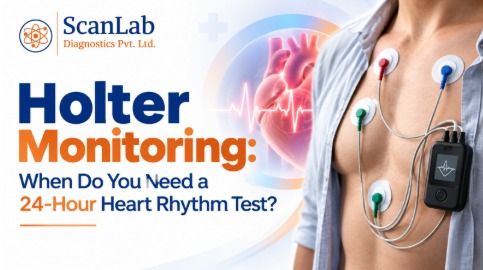
A Holter monitor is a small device that you wear on your body. It records your heartbeat all day and all night, usually for 24 to 48 hours. Some doctors ask for a shorter or longer time, depending on your case.
It works much like a normal ECG. Both track the electric signals that make your heart beat. But a Holter monitor does this for a full day or two, not just for a few minutes.
This is the main reason doctors use it. Some heart problems only show up now and then. A quick test in the clinic might miss them completely. A day-long test has a much better chance of catching them.
When Is a Holter Monitor Recommended?
Doctors often think about this test when:
- You feel palpitations or dizziness now and then, but your ECG looked normal
- Your doctor thinks something may be wrong with your heart's rhythm and wants more proof
- You already have an irregular heartbeat, and your doctor wants to see if your treatment is working
- Your doctor wants to see how your heart acts during your normal day, not just while you sit still in a clinic
Not everyone with these symptoms needs this test. Your doctor
will look at your full picture, your symptoms, your past health,
and your earlier test results, before deciding.
Symptoms That May Lead to Holter Monitoring
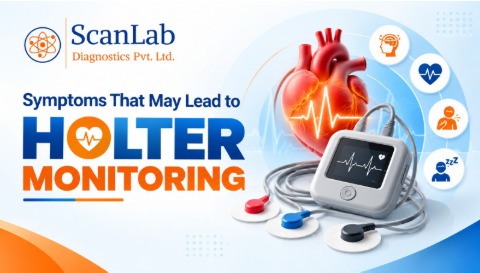
Here are some of the common reasons doctors suggest this test:
- Palpitations, that feeling when your heart pounds, races, or flutters
- Your heart skipping a beat or adding an extra one
- Feeling dizzy or light-headed with no clear reason
- Fainting, or feeling like you're about to faint
- Sudden, unexplained moments where your heart beats really fast
These are common problems, and most times, they turn out to
be nothing serious. The tricky part is that they can come
without warning and go away just as fast. A regular ECG only
checks your heart for a short time, so it can easily miss
these short episodes. That's the gap Holter monitoring is
built to fill.
How Does a 24-Hour Holter Monitor Work?
Getting the test started is simple and quick. A technician sticks a few small, soft patches on your chest. These patches connect through thin wires to a small box, about the size of a mobile phone, which you can clip to your belt or hang around your neck.
Once it's on, the device quietly records your heartbeat all day long. Most people forget it's even there after an hour or two. Many centres also give you a small notebook or diary. You write down the time whenever you feel something odd, like a racing heart, along with what you were doing then, walking, resting, eating, or climbing stairs. Later, the doctor checks if what you felt matches what the device recorded at that exact moment.
What Can Holter Monitoring Detect?
This test mainly looks for:
- An irregular heartbeat, one that beats too fast, too slow, or unevenly
- Extra or missed heartbeats
- Whether your symptoms, like palpitations, actually match a real change in your heart's rhythm
- How your heart behaves as you go through a normal day
It's also fair to be clear about what this test cannot do.
A Holter monitor does not catch every heart problem. It won't
tell you if your arteries are blocked or if there's a
structural issue with your heart, other tests like a 2D Echo
or Stress Test are used for that. It also only works if your
symptoms happen while you're wearing it. If nothing unusual
happens during those 24 or 48 hours, the report may look
normal, even if a problem still exists somewhere. This is
a real limit of the test, and sometimes your doctor may ask
you to repeat it or wear the monitor for longer.
ECG vs Holter Monitoring: What Is the Difference?
| Feature | Standard ECG | Holter Monitoring |
|---|---|---|
| How long it takes | Just a few minutes, done once at the clinic | Runs non-stop, usually 24 to 48 hours |
| What it shows | A quick look at your heart at that one moment | Your heart's activity through a full day and night, including sleep |
| Best for | A first, general check of your heart | Catching problems that come and go |
| Where it happens | At the clinic or diagnostic centre | Started at the centre, then worn at home |
| Its limit | May miss a problem that isn't happening right then | May miss a problem if it doesn't happen during the recording |
Think of it this way: an ECG is like a photo of your heart, while Holter monitoring is like a short movie. Neither one replaces the other. Doctors often use both together, starting with an ECG and moving to Holter monitoring if they need a fuller picture.
How to Prepare for a Holter Test
You don't need to do much to get ready. It usually helps to:
- Wear a loose shirt on test day, since the patches go directly on your bare chest
- Skip oils, lotions, or powder on your chest that day, as they can stop the patches from sticking well
- Tell the technician about any medicines you're taking
- Mention if you have any skin allergies, especially to tape or adhesive
Since the exact steps can change a little depending on the
device your centre uses, it's a good idea to ask the
diagnostic centre if there's anything else you should know
before you go.
What to Expect During the Test
On the day of your test, a technician will clean a few spots on your chest and stick the small patches on. These connect to the recorder, and you'll be shown how to wear it properly. If your centre gives you a diary, they'll explain how to use it too.
After that, you're free to go home and live your normal day. You'll come back to the centre once the recording time is done, usually the next day, so the device can be taken off and the data can be looked at.
What Can You Do While Wearing a Holter Monitor?
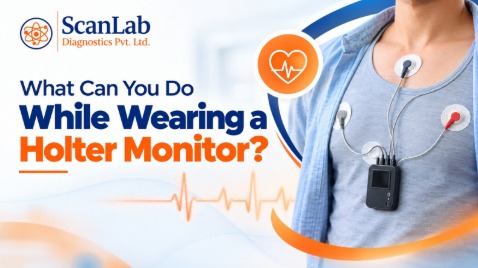
Good news, you can mostly live your day as usual. This usually includes:
- Going to work or school
- Walking around and doing light chores at home
- Eating and drinking like you normally would
- Sleeping through the night with it on (many people wear it while they sleep, since the heart can act differently then too)
Doing your regular routine is actually the whole point of the
test. The device wants to see how your heart behaves in real
life, not just when you're sitting still.
What Should You Avoid While Wearing It?
A few things are usually best avoided, though your centre may give you slightly different instructions depending on the device. In general, try to:
- Skip baths, showers, or swimming, since most devices don't handle water well
- Avoid hard exercise or anything that makes you sweat a lot, as this can loosen the sticky patches
- Stay away from strong magnets or certain electronic machines, which can sometimes mess with the recording
- Leave the patches alone, don't try to move or remove them yourself
If a patch comes off on its own, it's best to call the
diagnostic centre and ask what to do, rather than trying
to fix it yourself.
Is Holter Monitoring Painful?
No, it doesn't hurt at all. There are no needles and no injections involved, just soft patches stuck on your skin. Some people notice a little itching or mild irritation under the patches after wearing them a long time, but this usually goes away soon after the patches come off.
How Long Does Holter Monitoring Take?
The test itself usually runs for 24 to 48 hours, depending on what your doctor wants and which device is used. Putting the monitor on takes just a few minutes. Taking it off is quick too, at a short follow-up visit. After that, the data is checked, and your doctor will go over the results with you. Your diagnostic centre can tell you how long that part usually takes.
What Happens After Holter Monitoring?
Once the monitor comes off, the recorded data is downloaded and reviewed. An expert looks through the recording along with your symptom diary, checking if any heart rhythm changes line up with what you felt and wrote down. These findings then go to your doctor, who explains what they mean for you. Depending on the results, your doctor might reassure you, suggest more tests, or make changes to your treatment.
When Should You Seek Urgent Medical Care?
Holter monitoring is meant for symptoms that come and go over days or weeks. It's not the right step during an emergency. Get medical help right away, don't wait to book a Holter test, if you or someone near you has:
- Chest pain that is severe or won't go away
- Serious trouble breathing
- Fainting along with other worrying signs, like chest pain or confusion
- Signs that could point to a heart attack, such as pressure or pain spreading to the arm, jaw, or back, along with sweating or feeling sick
These situations need emergency care immediately, not a
scheduled test at a diagnostic centre.
Holter Monitoring in Pune
If your doctor has told you to get a Holter test, ScanLab Diagnostics Pvt. Ltd. in Market Yard, Pune, offers Holter monitoring along with other heart-related tests like ECG, 2D Echo, and Stress Test. Having all these tests at one place can be handy, especially when your doctor wants a fuller look at your heart, not just one test alone.
ScanLab also offers blood tests, X-ray, sonography, and dental diagnostics, so many of your routine checkups can be done at the same centre. If you're around Market Yard and your doctor has suggested a Holter test, it's worth having a proper talk with them first, so the test fits your actual symptoms and needs.

Frequently Asked Questions About Holter Monitoring
Find clear answers to common questions about Holter monitoring, how it works, and what to expect during the test.
It records your heart's activity non-stop, usually for 24 to 48 hours, so doctors can spot rhythm problems that a short, regular ECG might miss.
Not quite. Both check your heart's electric activity, but a normal ECG is a quick test done in the clinic, while a Holter monitor keeps recording as you go about your normal day. One is like a photo, the other is like a video.
Yes, that's one of the main things it's used for. It can pick up extra beats, missed beats, or times when your heart beats too fast or too slow, as long as they happen while you're wearing it.
Most often, 24 to 48 hours. But your doctor might ask for a different length of time, depending on your symptoms and monitoring needs.
Yes, in fact, you're expected to. Some heart changes happen while you sleep, so wearing it overnight is a normal part of the test. Just be a little careful with the wires.
Yes, you're meant to live your day as usual. The whole idea is to see how your heart behaves during real life. Just avoid things like swimming or hard exercise; your centre will tell you the specifics.
No. It only uses sticky patches on your skin, no needles or injections. Some people feel mild itching under the patches, but that's about it.
Not much. Just wear a loose shirt and skip oils or lotions on your chest before the test. Your diagnostic centre will let you know if anything else is needed.
The report might come back looking normal, even if there's still an underlying issue. In that case, your doctor may suggest doing the test again or wearing the monitor for a longer time.
If your palpitations happen often, last a while, or come with dizziness, chest discomfort, or fainting, it's a good idea to talk to a doctor. They can check your symptoms and decide if an ECG or Holter monitoring would help.
Have More Questions About Holter Monitoring?
Speak with our healthcare team for more information about Holter monitoring and cardiac testing.