Table of Contents
Tap any topic below to jump directly to that section.
- Introduction
- What Is a Colour Doppler Test?
- What Does a Colour Doppler Test Check?
- Uses of Colour Doppler Test
- When Do You Need a Colour Doppler Test?
- How Is a Colour Doppler Test Done?
- Is a Colour Doppler Test Painful?
- How Long Does a Colour Doppler Test Take?
- How Should You Prepare for a Colour Doppler Test?
- What Happens After the Colour Doppler Test?
- Colour Doppler vs Normal Ultrasound
- Is Colour Doppler Test Safe?
- Frequently Asked Questions
- Colour Doppler Test in Pune
- Key Takeaway
Introduction
If your doctor has asked you to get a Colour Doppler test, you probably have a few questions in mind. What does this test actually check? Does it hurt? Do you need to prepare for it in any special way?
A Colour Doppler test is a type of ultrasound scan that looks at how blood is moving through your blood vessels. It is commonly used to check blood flow in the legs, neck, abdomen, and during pregnancy. This guide explains what the test involves, why it may be recommended, and what to expect before, during, and after the scan.
What Is a Colour Doppler Test?
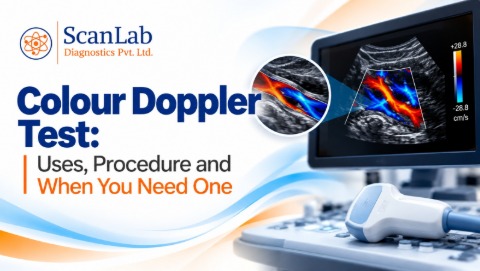
A Colour Doppler test is an ultrasound scan that shows how blood is flowing through your veins and arteries. It uses sound waves, not X-rays, and adds colour to the images so that blood flow direction and speed are easier to see.
A regular ultrasound mainly shows the structure of organs and tissues, like their shape and size. A Colour Doppler scan goes a step further. It also shows movement, specifically the movement of blood inside your blood vessels.
During the scan, a small handheld device called a probe is moved over your skin. The probe sends sound waves into the body and picks up the signals that bounce back. A computer then converts this information into a moving picture, with colours representing the direction and speed of blood flow. This is why the test is sometimes called a Doppler ultrasound or a blood flow test.
What Does a Colour Doppler Test Check?
A Colour Doppler test can help assess how well blood is moving through different parts of the body. Depending on the reason for the scan, it may be used to look at:
- Overall blood flow in a particular area
- The condition of veins
- The condition of arteries
- Any narrowing or blockage in a blood vessel
- Signs that may suggest a blood clot
- Areas where blood flow appears reduced
- Blood flow to the baby and placenta during pregnancy
- Blood flow in selected organs, such as the kidneys or liver
It is worth remembering that a Colour Doppler test cannot check every possible blood vessel problem. What it looks at depends on the part of the body being scanned and the reason your doctor has recommended it.

Uses of Colour Doppler Test
Colour Doppler test uses vary quite a bit depending on where in the body the scan is done. Here are some of the more common ones.
Checking Blood Flow in the Legs
This is one of the most frequent Colour Doppler test uses. It can help assess blood flow in the leg veins and arteries, which is useful when a doctor wants to rule out a blood clot or check the cause of leg swelling or pain.
Checking Blood Flow in the Neck
A Doppler scan of the neck arteries can help assess blood flow to the brain. Doctors sometimes recommend this when there are concerns about narrowing in these vessels.
Colour Doppler During Pregnancy
Colour Doppler during pregnancy is used to check blood flow between the mother, the placenta, and the baby. This can give useful information about how the baby is growing and how well the placenta is functioning, and it is usually done alongside a regular pregnancy ultrasound.
Checking Abdominal Blood Vessels
A Colour Doppler scan of the abdomen can help assess blood flow to organs such as the liver, kidneys, and spleen. It may also be used to check the major blood vessels running through the abdomen.
Checking Blood Flow in Other Areas
Doctors may also recommend a Colour Doppler scan for the arms, the heart's blood vessels, or other areas, depending on a patient's symptoms and medical history.
When Do You Need a Colour Doppler Test?
There is no single symptom that automatically means you need a Colour Doppler test. Your doctor decides based on your symptoms, medical history, and physical examination. That said, some common situations where a Colour Doppler test may be recommended include:
- Swelling in a leg or arm
- Pain that could be linked to a circulation problem
- A suspected blood clot
- Visible varicose veins
- Monitoring blood flow during pregnancy
- An unusual finding on an earlier scan or test
- Follow-up of a known blood vessel condition
If you are experiencing any of these, it is best to speak with your doctor. They will decide whether a Colour Doppler test, or a different test altogether, is the right next step for you.
How Is a Colour Doppler Test Done?
The Colour Doppler test procedure is simple and does not usually require any special equipment on your part. Here is what typically happens:
- Positioning: You will be asked to lie down on an examination table, in a position that gives the best view of the area being scanned.
- Applying gel: A small amount of ultrasound gel is applied to your skin. This gel helps the sound waves travel more clearly.
- Scanning with the probe: The technician gently moves a handheld probe over the area. You may feel slight pressure as this happens.
- Recording information: The probe picks up images along with information about blood flow, which appears as colours on the screen.
- Review and reporting: Once the scan is complete, the images are reviewed, and a report is prepared for your doctor.
The exact steps can vary slightly depending on which part of the body is being examined.
Is a Colour Doppler Test Painful?
No, a Colour Doppler test is not painful. It is a non-invasive scan, which means nothing is inserted into the body.
You may feel mild pressure as the probe moves over your skin, especially in areas that are already tender or swollen, but this is usually brief and easy to tolerate. Most patients describe the experience as simply uncomfortable at most, not painful.
How Long Does a Colour Doppler Test Take?
The duration of a Colour Doppler test depends on the body part being examined and the type of Doppler study your doctor has requested. A scan of a single area, such as one leg, may take less time than a more detailed study covering multiple blood vessels.
Rather than giving an exact time, it is best to ask the diagnostic centre directly, since this can vary from patient to patient.

How Should You Prepare for a Colour Doppler Test?
Colour Doppler test preparation depends largely on which part of the body is being scanned. There is no single preparation routine that applies to every type of Doppler test. In general, you may be asked to keep the following in mind:
- Fasting may be required for certain abdominal Doppler studies, but this is not needed for every type of scan
- Wear comfortable, loose-fitting clothing that makes it easy to expose the area being examined
- Carry any previous ultrasound or Doppler reports, if you have them
- Bring your doctor's prescription or referral note
- Follow any specific instructions given by the diagnostic centre when you book your appointment
Since preparation instructions can differ between centres and scan types, it is always a good idea to confirm with the diagnostic centre before your appointment.
What Happens After the Colour Doppler Test?
Once your scan is complete, the recorded images and blood flow information are reviewed by a radiologist or trained specialist. A detailed report is then prepared based on these findings.
Your doctor will go through this report with you and explain what it means for your specific situation. Depending on the result, they may recommend further tests, a change in treatment, or simply reassure you that everything looks normal.
Colour Doppler vs Normal Ultrasound
People often ask how a Colour Doppler scan is different from a regular ultrasound. Here is a simple comparison:
| Feature | Normal Ultrasound | Colour Doppler Test |
|---|---|---|
| Main purpose | Looks at the structure of organs and tissues | Looks at blood flow along with structure |
| What it shows | Shape, size, and position of organs | Direction and speed of blood flow, shown in colour |
| Blood vessel assessment | Limited | Can help assess veins and arteries in detail |
| Common uses | Pregnancy scans, abdominal organ checks, general imaging | Blood clots, varicose veins, narrowing of vessels, pregnancy blood-flow monitoring |
Both tests use the same basic ultrasound technology. A Colour Doppler scan simply adds the ability to visualise blood movement.
Is Colour Doppler Test Safe?
Yes, a Colour Doppler test is generally considered safe when it is medically indicated. It uses sound waves to create images, not X-rays or any form of radiation.
A few points worth knowing:
- Ultrasound-based scans like this one have been used safely for many years, including during pregnancy
- There is no radiation exposure involved
- Colour Doppler during pregnancy should be performed only when recommended and guided by a qualified healthcare professional
- As with any test, it should be done for a genuine medical reason, based on your doctor's advice
Frequently Asked Questions About Colour Doppler Test
Here are some common questions patients ask about Colour Doppler testing.
What is a Colour Doppler test used for?
It is used to check how blood is flowing through veins and arteries. Depending on the area scanned, it can help assess blood clots, blockages, varicose veins, and blood flow during pregnancy.
Is Colour Doppler painful?
No. It is a painless, non-invasive scan. You may feel slight pressure from the probe, but there is no injection or insertion involved.
How long does a Colour Doppler test take?
The time varies depending on the body part being examined and the type of study requested. It is best to check with your diagnostic centre for an estimate.
Do I need to fast before a Colour Doppler test?
Not always. Fasting is sometimes needed for certain abdominal Doppler scans, but many Colour Doppler tests do not require it. Always confirm with the centre beforehand.
Can Colour Doppler help detect a blood clot?
Yes, Colour Doppler for blood clot detection is one of its common uses, especially for the legs. It can help assess whether blood flow through a vein looks reduced or blocked, though the final interpretation is made by a doctor.
Is Colour Doppler safe during pregnancy?
Colour Doppler during pregnancy is generally considered safe when performed as advised by a healthcare professional. It uses sound waves, not radiation.
What is the difference between ultrasound and Colour Doppler?
A regular ultrasound shows the structure of organs and tissues. A Colour Doppler scan adds information about blood flow, shown through colour, on top of the structural image.
When should I get a Colour Doppler test?
The need for the test depends on your symptoms and medical history. Your doctor will recommend it if they suspect a circulation-related issue that needs further evaluation.
Can I eat before a Colour Doppler test?
It depends on the type of scan. Some abdominal studies may require fasting, while many other Doppler tests do not restrict eating. Check with the centre when booking.
What should I carry for my Colour Doppler appointment?
Carry your doctor's prescription, any previous relevant reports, and wear comfortable clothing that allows easy access to the area being scanned.
Colour Doppler Test in Pune
If you are looking for a Colour Doppler test in Pune, it helps to choose a diagnostic centre that can guide you clearly on preparation, scheduling, and reporting for your specific scan. ScanLab Diagnostics Pvt. Ltd.
is one of the diagnostic centres in Pune offering Colour Doppler testing as part of its diagnostic services.
Before booking your appointment, it is a good idea to confirm scan-specific preparation instructions, timings, and report turnaround directly with the centre, since these can vary depending on the type of Doppler study your doctor has advised.
Key Takeaway
A Colour Doppler test is a safe, painless ultrasound scan that helps assess how blood is flowing through your veins and arteries. It is commonly used to check for blood clots, narrowing of blood vessels, varicose veins, and blood flow during pregnancy. Preparation depends on the area being scanned, so it is best to confirm instructions with your diagnostic centre beforehand. The test itself is quick and does not involve any radiation. Ultimately, whether you need a Colour Doppler test depends on your symptoms and your doctor's advice, so it is always best to discuss your specific situation with them before booking one.